PU Shoe Uppers Tearing Along Stitch Lines
Check PU upper seam failures by separating thread breakage, material tear and yarn slippage, then plan comparable sewing trials and suitable testing.
When a PU-coated textile upper tears beside a seam, first establish whether the thread has broken, the material has torn through the needle holes, or the backing yarns have moved apart. These observations lead to different checks. Keep the failed assembly and an unused material reference before changing the material or sewing specification.
This guide is for footwear buyers and development teams investigating a stitched upper. It is a troubleshooting framework, not a diagnosis from a photograph, a sewing-machine recipe or evidence of any Youxiang material’s performance.
Identify what has actually failed
Photograph the face, backing and seam edge before any further destructive examination. Mark the direction of loading and where the damage started. Check whether it first appeared during stitching, lasting, a laboratory test or wear. A close-up should sit beside a wider photograph showing the component and seam geometry.
Use the following observations to decide what to investigate, not to assign a cause automatically.
- Broken or frayed thread with the surrounding material largely intact: ask the sewing technician to examine the thread, its path through the machine, needle compatibility and stitch formation.
- A tear joining successive needle holes while thread remains in place: investigate the material around the perforations and the complete seam construction. This observation alone does not establish whether the material, the sewing operation or their combination is responsible.
- A gap caused by backing yarns moving away from the stitching: consider seam slippage where the textile structure makes it relevant. Coats describes this as yarn movement leaving a permanent opening. Do not apply that woven-fabric explanation automatically to every nonwoven backing. [1]
- Surface coating lifting away while the backing remains intact: record a separate layer-separation problem. A seam-strength result does not answer a coating-adhesion question.
More than one failure can occur in the same sample. Ask the laboratory to record the observed failure mode, rather than returning only a pass or a maximum number. [4]
Separate the material question from the sewn assembly question
A needle-perforation test and a stitched-seam test do not examine the same specimen. ISO 17697:2016 makes this distinction explicit: Method A measures resistance when a row of needles is pulled through the material in a direction perpendicular to the row; Method B concerns stitched seams taken from footwear or prepared to represent its construction. [2]
SATRA TM33, dated July 2021, addresses strength perpendicular to needle perforations. Its public scope covers thin sheet materials, especially woven structures, and includes coated textiles among its uses. It should not be described as a test of the factory’s actual needle, thread and stitch setting. [3]
SATRA TM180, dated November 2016, assesses a stitched upper or lining seam and records breaking strength and failure type. It can therefore address the assembled seam question that a material-only result leaves open. [4]
Ask the laboratory which method suits the selected construction and the customer’s requirement. These public descriptions help select a test; they do not provide the complete procedures or a universal footwear pass limit. Do not assume different methods are interchangeable. Retain the method edition, specimen direction, conditioning, reported units and acceptance criterion when comparing results.
Check the sewing setup without prescribing a universal fix
Record the actual needle system, size and point, thread identification, stitch type, spacing, seam allowance and reinforcing layers. SATRA identifies seam-construction variables as useful checks when interpreting a poor seam result. [6] Include machine or operation changes between the accepted sample and the failed one. Have the factory check the equipment and specimen rather than choosing a new material from a surface photograph.
Coats identifies needle condition, thread–needle compatibility and machine components as relevant sewing checks. It also notes that excessive lockstitch tension can reduce seam extension and contribute to early failure. These are possibilities to investigate, not proof of the cause in a particular upper. [1]
Treat the backing as part of needle selection. Groz-Beckert’s guidance for leather–textile combinations warns that cutting points can damage the textile component. That example comes from vehicle-interior applications, not a validation of a footwear setting. The useful caution for a PU-coated textile upper is to have the needle supplier and sewing technician consider all layers and verify their recommendation by trial. It does not justify prescribing one point type for every synthetic leather. [5]
Do not automatically add more stitches, fit a thicker thread or change to a material sold under a higher-priced trade name. A proposed change needs to address the observed failure and remain compatible with the intended assembly.
Run a comparison that can explain the result
The following comparison sequence is an editorial investigation aid, not a standard test procedure. Agree specimen preparation and acceptance requirements with the factory and laboratory.
- Preserve a baseline. Identify the failed construction and the last accepted reference, if available. Keep unstitched material as well as a representative sewn assembly. Record article, colour, batch, backing, thickness and cut orientation without filling unknown fields by guesswork.
- Separate the proposed changes. If testing a different material, retain the agreed sewing setup where it is suitable. If checking a sewing adjustment, retain the same identified material. When a needle and thread must change together for compatibility, record them as a paired change; do not claim to have isolated either one.
- Record appearance and failure together. For each trial, keep photographs, specimen identity, the deliberate change, test result with units and the laboratory’s failure description. A higher result accompanied by a different failure mode needs interpretation, not an automatic approval.
- Confirm the intended component. After a useful screening result, make the actual upper construction with its specified layers and edge treatment. Verify the relevant customer requirements before production approval. A loose swatch and an assembled upper answer different questions.
A compact trial record can use these fields: reference ID; material and batch; seam construction; controlled settings; deliberate change; method and conditions; result and unit; failure location; next decision. Keep the original result and the changed trial together so another person can reconstruct the comparison.
What to send when asking for a replacement material
Send the failed component, an unused reference when available, face and backing photographs, the exact seam location, and the agreed sewing and testing requirements. State which parts of the construction may change and which must remain fixed. This gives a material supplier a defined problem to investigate instead of an instruction to supply “stronger PU”.
Youxiang Leather supplies footwear roll materials. Use the footwear material sourcing checklist to prepare the request and the material matching page to discuss candidates. Suitability must be confirmed on the selected material and the intended shoe-factory trial; this article does not certify a product or promise that changing materials will resolve the failure.
Sources and evidence boundaries
Sources checked on 23 October 2026. The full paid ISO and SATRA test methods were not accessed. The public scope and principle pages support the distinctions below, not complete test instructions. Source numbers in the English text link directly to these pages.
Undated manufacturer FAQ. Used for the distinction between yarn slippage and other opening, and for sewing-system checks. No generic stitch density, machine speed, seam-strength formula or brand product recommendation has been adopted.
[2] ISO 17697 2016 public abstract
ISO 17697:2016, edition 2, published May 2016; the public ISO page says confirmed in 2022 and current. Used to distinguish Method A from Method B. No pass criterion or detailed procedure is inferred.
Public catalogue edition July 2021. The material-level perforation scope includes thin sheets and coated textiles. No claim is made that it evaluates the factory sewing process.
Public catalogue edition November 2016. Used for actual or simulated footwear stitched seams and reporting failure type. Not equated with ISO methods.
[5] Groz Beckert leather and technical textiles brochure
EN 07.2025 brochure, printed page 13, vehicle-interior section. Supports caution about cutting points on textile-containing combinations. Application boundary is explicit; no needle code is prescribed for footwear. PDF text was read; no illustration or table alignment is interpreted.
[6] SATRA Using tensile testers part 2
January 2021 SATRA Bulletin article, TM180 section. Supports looking at the failure mode and evaluating seam construction variables. No source photographs, test settings or results are reproduced.
How to interpret the original investigation aid
The baseline, paired-change rule and compact trial record are an editorial synthesis for communication between buyer, factory and laboratory. They are not presented as a new standard, a validated experiment, or a Youxiang test result. Observations guide further checks; they do not establish responsibility for a failure.
Have a material reference to match?
Send the shoe component, clear face, backing and edge photos, your color reference and estimated quantity.
Related guides
How Footwear Buyers Should Read a PU Hydrolysis Test Report
A PU hydrolysis test report is useful when you can connect its result to the material you intend to buy and the requirement your shoe must meet. Before approving a coated upper material, check four things: which sample was tested, how it was aged, what was evaluated afterwards, and which acceptance criteria were applied.
Read guide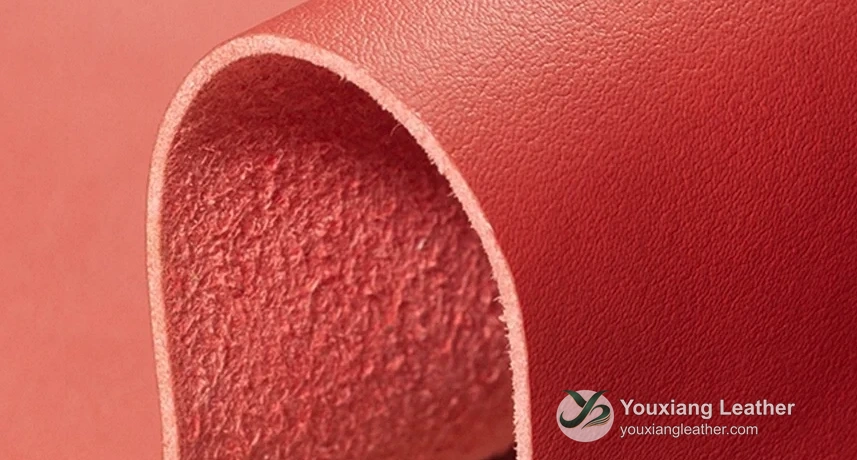
How to Choose PU Leather for Shoe Uppers
Compare shoe components, backing, thickness and physical samples before choosing PU upper materials. Use this practical footwear sourcing checklist.
Read guide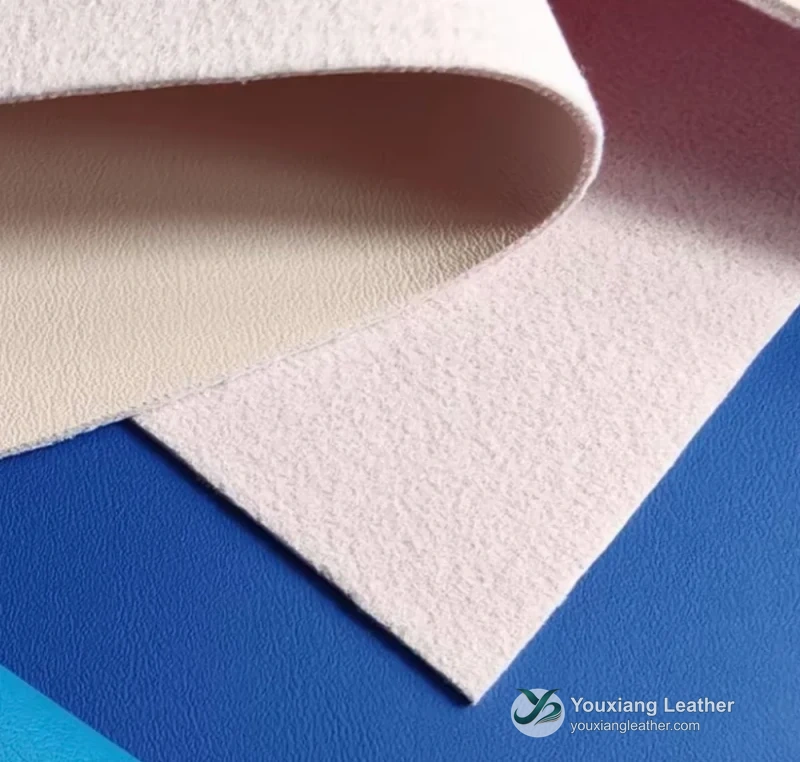
Microfiber PU vs Imitation Microfiber PU
Compare microfiber PU and imitation microfiber-backed PU using real sample photos, construction questions and a practical quotation checklist.
Read guide