














Microfiber PU vs Imitation Microfiber PU
Compare microfiber PU and imitation microfiber-backed PU using real sample photos, construction questions and a practical quotation checklist.
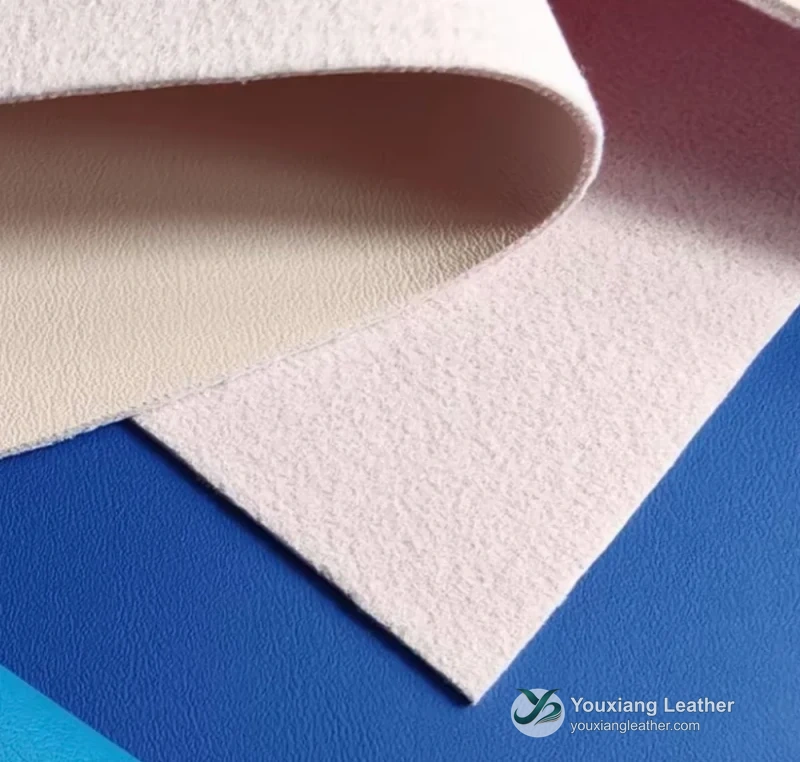
Similar trade names do not mean the same construction
Microfiber PU leather and imitation microfiber-backed PU are separate sourcing groups in the Youxiang Leather catalog. The practical question is what the selected sample is made from and how it behaves in your intended shoe component. Similar surface grain, color or a suede-like back is not enough to establish that two samples are interchangeable.
In our catalog, microfiber PU refers to microfiber-based PU materials. Imitation microfiber-backed PU describes a separately listed group with a microfiber-look backing. The second name should not be treated as proof of a microfiber substrate or a particular fiber composition.
What the sample photographs can tell you
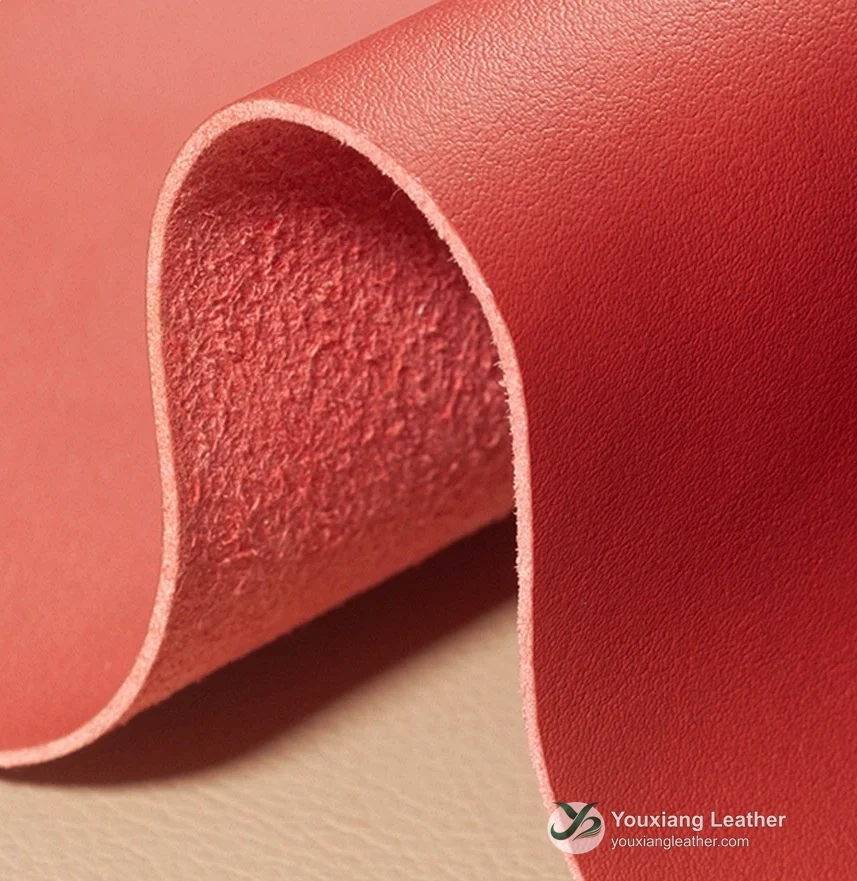
These are photographs of different samples, not a controlled performance test. They help describe visible surface and backing characteristics. They do not establish fiber percentages, coating chemistry, tear strength, abrasion resistance or the service life of either material.
Compare evidence, not a generic winner
| Comparison | Microfiber PU leather | Imitation microfiber-backed PU |
|---|---|---|
| Catalog description | Microfiber-based PU material. | PU material with a microfiber-look backing; listed separately. |
| Construction evidence | Confirm the selected substrate, layers and any declared composition. | Confirm the actual backing and layers; do not infer them from the trade name. |
| Physical comparison | Review thickness, hand feel, surface, cut edge and backing on the selected sample. | Review the same details under the same comparison conditions. |
| Performance | Use the customer’s agreed method and requirement for that article. | Use the same agreed criteria where the application is the same. |
| Commercial comparison | Confirm specification, usable width, quantity, color and supply terms. | Confirm equivalent purchasing conditions before comparing quotations. |
A blanket statement that one category always lasts longer, breathes better or costs a fixed amount more would not tell you whether the actual candidates meet your specification. Ask which evidence is available for the article being quoted.
Check the backing and the finished component
Start with clear face, back and edge photographs. If the photos leave uncertainty, compare physical samples. Record the material reference for each sample so that observations and quotations refer to the same item.
Next, examine the operations your component requires. An overlay, folded edge or perforated panel creates different questions from a broad, unbroken upper panel. Share the intended cutting, stitching, folding and bonding process with the supplier, then evaluate candidates in your own development process.
For a replacement request, tell us which characteristics must stay close to your reference and which may change. Color, grain, softness and construction may need different levels of matching. This makes it easier to compare alternatives without suggesting that a visually similar sample is an exact equivalent.
Make the quotations comparable
- Use the same shoe component and approved reference when requesting alternatives.
- Specify the thickness, tolerance, color and backing requirements that matter to your project.
- Confirm the quoted unit, usable width and any roll-length or packing terms.
- State the quantity per color, rather than only a combined total.
- Confirm stock, MOQ, sample availability and delivery timing for each candidate. Material samples and custom sampling from Youxiang are free. The buyer pays shipping.
If the usable widths or quoted units differ, the two headline prices may not represent the same amount of material. Cutting yield and suitability also belong in your production evaluation; a low roll price alone does not settle the choice.
Keep the final choice tied to a specific sample
Use the selected sample and agreed specification as the reference for the order. Ask for any required test information or documentation before approval, and confirm what is available for that material. Neither sourcing-group name is a catalog-wide certification.
Browse microfiber PU leather and imitation microfiber-backed PU, then use our material-matching service to compare candidates against your own reference.
Record the construction before approving a replacement
Keep a face-to-back description for each candidate: surface finish, main backing, bonding or lamination layers and any additional reinforcement. Mark composition or layer information that has not been confirmed rather than inferring it from a photograph.
The PU material structure guide explains why a PU description alone does not identify the whole material. Compare the replacement and reference in the same intended assembly, with comparable methods and conditions for any required testing.
Have a material reference to match?
Send the shoe component, clear face, backing and edge photos, your color reference and estimated quantity.
Related guides
PU Shoe Uppers Tearing Along Stitch Lines
Check PU upper seam failures by separating thread breakage, material tear and yarn slippage, then plan comparable sewing trials and suitable testing.
Read guideHow Footwear Buyers Should Read a PU Hydrolysis Test Report
A PU hydrolysis test report is useful when you can connect its result to the material you intend to buy and the requirement your shoe must meet. Before approving a coated upper material, check four things: which sample was tested, how it was aged, what was evaluated afterwards, and which acceptance criteria were applied.
Read guide
How to Choose PU Leather for Shoe Uppers
Compare shoe components, backing, thickness and physical samples before choosing PU upper materials. Use this practical footwear sourcing checklist.
Read guide