














What Is PU Leather? Surface, Backing and Material Structure
Understand PU footwear materials by comparing the face, backing and edge. Separate trade names and texture references from verified specifications.
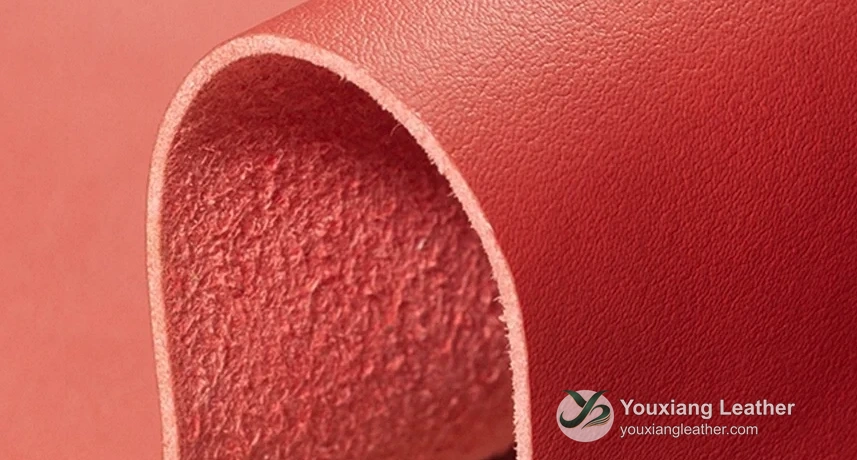
For footwear sourcing, “PU leather” is a synthetic material description, not a complete specification. PU refers to polyurethane, but buyers still need to identify the selected material’s surface, backing and thickness. A familiar grain or trade name does not tell you everything needed to compare two articles.
This guide explains how to read a sourcing reference. It does not assign a fibre composition, durability rating or certification to a material without article-specific evidence. Youxiang Leather’s footwear roll materials are synthetic materials, not genuine leather.
For technical background, Covestro describes polyurethane coatings for synthetic materials in its textured synthetics overview. Its named technologies and performance claims should not be assumed to describe every PU article offered by another supplier.
Read the face, backing and edge together
The face is the visible surface being compared for appearance and feel. The backing is the reverse side and an important part of identifying the construction. The edge helps show the thickness and layers present in a sample. Ask for all three views instead of relying on a face photograph alone.
Put the reference and candidate side by side. Record what matches, what differs and what remains unknown. A supplier may be able to shortlist a visual alternative from photos, but the buyer should assess the physical sample before treating it as a replacement.
Distinguish the three sourcing groups
| Youxiang material group | How to compare a candidate |
|---|---|
| Microfiber PU leather | Check the specific construction, backing, thickness, surface and available documentation. |
| Imitation microfiber PU | Compare its actual backing and finished sample; do not treat the trade name as equivalent to microfiber PU. |
| Stretch PU | Check direction and recovery requirements as well as the face, backing and assembly. |
These groups are not a universal quality ranking. A material should be selected for its intended shoe component and the buyer’s requirements, not because one category name sounds more technical. Read our microfiber PU comparison for the distinction between the first two groups.
Separate appearance from performance
A photograph can show a surface pattern; it cannot establish a hydrolysis rating, rubbing colorfastness result or coating adhesion result. SATRA’s upper and lining test directory lists distinct methods for these properties. The buyer should state which method and acceptance criteria apply to the selected article.
If performance documentation is important, send the required method, target and intended use before approval. Check that any supplied report identifies the correct sample and scope. This guide does not imply that every material in our reference catalogue has been tested or certified.
Use a construction-aware sourcing brief
Consider a buyer with a red upper reference. Sending only its face photograph may produce candidates with a similar grain but different backs. Adding backing and edge photos, a physical sample, the shoe component and target thickness makes the comparison more specific. The supplier can then distinguish a close reference match from an alternative that needs a construction trial.
Keep the requested attributes separate: color, grain, backing, thickness, feel and test requirements. Mark which are mandatory and which may vary. That avoids rejecting a useful candidate for an optional attribute, or accepting one that misses an essential requirement.
What a texture card can and cannot confirm
A texture or color reference can help you communicate an appearance. It is not proof of current stock, composition, a fixed order quantity or delivery timing. Youxiang offers in-stock options across its three core groups, but availability is confirmed by material code, color, thickness and quantity.
Browse footwear roll material references and use sample-based material matching to discuss an article. For upper selection, continue with our shoe upper material guide.
Have a material reference to match?
Send the shoe component, clear face, backing and edge photos, your color reference and estimated quantity.
Related guides
PU Shoe Uppers Tearing Along Stitch Lines
Check PU upper seam failures by separating thread breakage, material tear and yarn slippage, then plan comparable sewing trials and suitable testing.
Read guideHow Footwear Buyers Should Read a PU Hydrolysis Test Report
A PU hydrolysis test report is useful when you can connect its result to the material you intend to buy and the requirement your shoe must meet. Before approving a coated upper material, check four things: which sample was tested, how it was aged, what was evaluated afterwards, and which acceptance criteria were applied.
Read guideHow to Choose PU Leather for Shoe Uppers
Compare shoe components, backing, thickness and physical samples before choosing PU upper materials. Use this practical footwear sourcing checklist.
Read guide